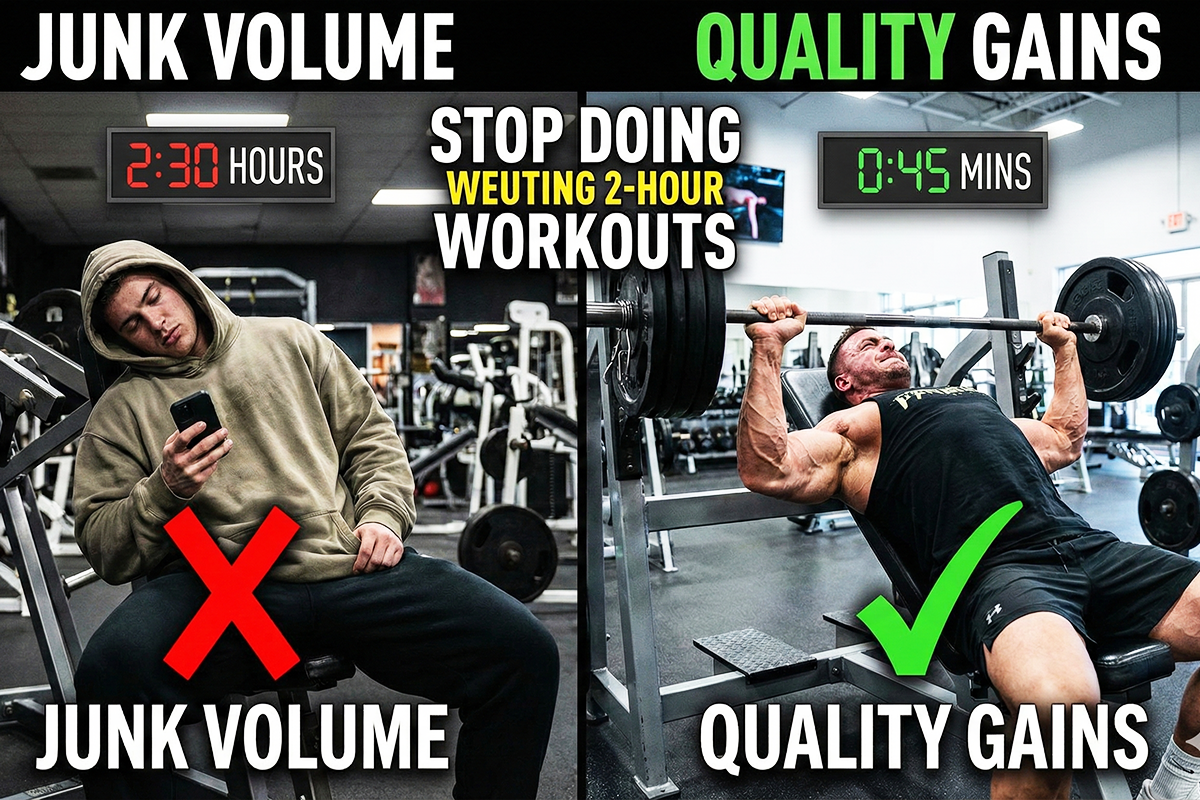
In the modern quest for physical transformation, many gym-goers find themselves trapped in an unending cycle of effort without reward. Picture a dedicated individual spending several hours each week in the gym, meticulously following a workout regime, yet their reflection in the mirror fails to reveal any significant changes. This experience is not just disheartening; it breeds frustration and self-doubt. Many in this situation cling to the common belief that more sets lead to more muscle gain, thinking that simply increasing the volume of their workouts will ensure visible results.
However, this prevailing notion often overlooks a critical aspect of effective workouts. The emphasis on junk volume—excessive repetitions and sets that do little to stimulate real muscle growth—can actually undermine progress. As the hours in the gym accumulate, individuals may not realize that such an approach could lead to overtraining symptoms. This includes fatigue, emotional strain, and a cascade of physiological responses that increase cortisol levels, known for its detrimental effects, including muscle loss.
This long-standing myth of “more is better” is deeply ingrained in the fitness culture, deterring many from exploring alternative methods like hypertrophy training, which focuses on building muscle effectively without resorting to unnecessary volume. Moreover, effective reps can provide enhanced gains with reduced time commitment. Imagine a training approach where gym-goers can paradoxically reduce their time spent training while potentially doubling their results, all while avoiding the traps associated with junk volume.
Ultimately, the insights gained from this paradigm shift could not only alleviate the emotional burden of frustration but also pave the way toward meaningful physical change. Achieving that balance between intensity and duration may be the key to finally breaking through the barriers that have long hindered these committed individuals from seeing their hard work reflected in their physiques.
In the context of resistance training, the term ‘junk volume’ refers to the amount of workout done that fails to stimulate muscle adaptations despite the effort put into it. Essentially, junk volume represents those extra sets or repetitions that do not contribute meaningfully to muscle growth or performance improvements. This phenomenon is particularly prevalent when individuals engage in high-rep, low-weight training sessions under the misconception that longer workouts are inherently more effective for hypertrophy training.
The concept of ‘effective reps’ is pivotal to understanding how to maximize your workout efficacy. According to this theory, only the final 3-5 reps of a set approaching muscular failure are primarily responsible for inducing significant muscle growth. These effective reps occur under conditions of sufficient weight and intensity, distinguishing them from those additional repetitions that contribute little to no further growth and classify as junk volume. Therefore, simply performing numerous sets without sufficient intensity frankly becomes counterproductive, as it leads to overtraining symptoms, fatigue, and ultimately can inhibit muscle gains.
In stark contrast, effective lower-rep and higher-intensity training has been shown to optimize the phenomenon of hypertrophy. Each workout should focus on maximizing performance with weights that challenge the lifter without incurring excessive fatigue. High intensity training, while difficult, ensures that every rep counts toward muscle development by reducing the possibility of junk volume. Furthermore, it highlights the importance of balancing your workout sessions to avoid pitfalls such as high cortisol levels, which can lead to muscle loss. Thus, effective training routines should prioritize intensity and limit unnecessary volume, ultimately leading to enhanced results in muscle growth.
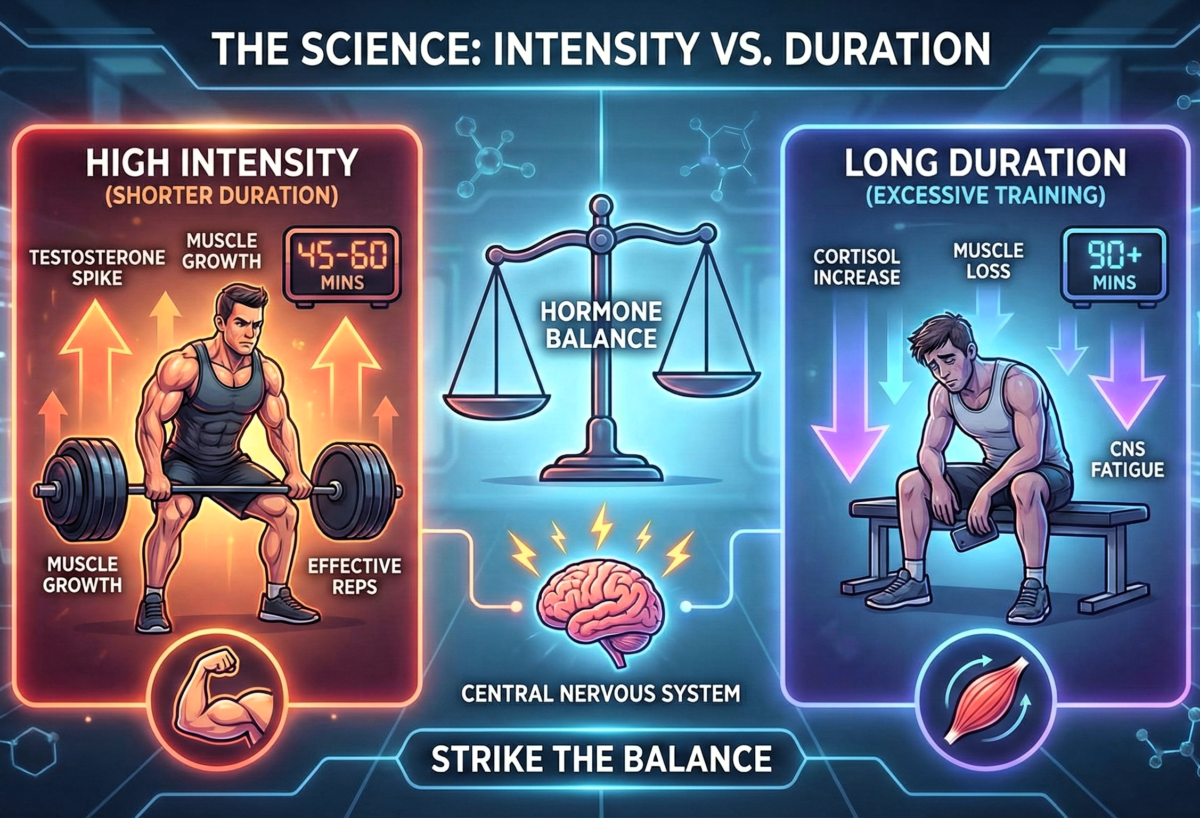
The Science: Intensity vs. Duration
The relationship between workout intensity and duration is critical for maximizing muscle growth and preventing the common pitfalls associated with excessive training. One of the key hormones involved in this balance is cortisol, a catabolic hormone that can lead to muscle loss when levels remain elevated for prolonged periods. When individuals engage in long training sessions, their cortisol levels can spike, which not only inhibits testosterone production but may also contribute to various overtraining symptoms, such as fatigue and weakened immune function.
Testosterone plays a crucial role in muscle building; thus, a significant drop in this hormone following extended workout durations may greatly hinder the hypertrophy training process. Typically, workouts beyond a certain duration—usually exceeding 60 to 90 minutes—can lead to diminished strength gains and increased risk of injury. As workouts extend, the body shifts its focus from muscle building to recovery and repair, which may result in decreased effective reps and overall workout efficiency.
Moreover, training for excessively long periods can induce significant fatigue in the central nervous system, leading to decreased performance in subsequent workouts. This fatigue can manifest as tiredness, lack of motivation, and poor lifting technique, ultimately translating to suboptimal results. High intensity training, on the other hand, encourages muscle growth without incurring the adverse effects associated with prolonged sessions. Therefore, striking a balance between workout duration and intensity is vital to prevent junk volume, maximize muscle gain, and maintain hormone levels conducive to muscle strength.
Comparison: Sprinter vs. Marathon Runner
The physiological differences between sprinters and marathon runners serve as a practical analogy for understanding the impact of training strategies on muscle development. Sprinters, who engage in high intensity training, typically exhibit well-defined, muscular physiques. This result can be attributed to their training regimen, which focuses on explosive movements and shorter workout durations, usually involving sprinting protocols that encourage hypertrophy. Such methods lead to both muscle gains and the engagement of effective reps, driving muscle fiber recruitment at a high rate.
In contrast, marathon runners generally have leaner bodies characterized by lower muscle mass. Their training consists of prolonged, lower-intensity workouts aimed at endurance. While this approach is excellent for cardiovascular fitness, it often lacks the stimulus necessary for significant hypertrophy, leading to what is often termed ‘junk volume’—excessive training without corresponding gains in muscle strength or size. Moreover, extended low-intensity sessions can lead to overtraining symptoms, such as fatigue and increased cortisol levels, which may contribute to muscle loss and hinder progress.
Real-life scenarios in the gym reflect these differences. For instance, individuals aiming for muscle building might perform squat variations, focusing on heavy weights with fewer repetitions to maximize effective reps that stimulate growth. Conversely, those leaning towards endurance may favor lighter weights and higher repetitions, inadvertently leading to a form of training that prioritizes stamina over hypertrophy. Therefore, recognizing the distinctions between the sprinter and marathon runner can illuminate the essential training principles necessary for achieving optimal muscle gains.
The Solution: How to Fix Your Routine
To maximize your gains and minimize the pitfalls associated with junk volume, effective workout strategies are crucial. A fundamental principle that can enhance your results is the concept of progressive overload. This principle encourages you to gradually increase the weight, reps, or intensity of your workouts to stimulate muscle growth and avoid stagnation.
Adopting a ‘less is more’ philosophy can be significantly beneficial. Many individuals tend to overtrain, leading to symptoms such as fatigue and reduced performance. It is essential to cap your workouts at around 60 minutes. Research suggests that after this point, the effectiveness may diminish, potentially leading to overtraining symptoms such as cortisol spikes, which can contribute to muscle loss.
Additionally, you should focus on reducing the number of sets to 10-12 high-quality sets per workout. This approach emphasizes quality over quantity, aligning with the science of hypertrophy training, which indicates that effective reps—the final few reps in a set—are most critical for stimulating muscle growth. By prioritizing these reps, you can effectively activate muscle fibers, facilitating better muscle gains.
Moreover, keeping your rest periods active helps maintain an elevated heart rate, which is particularly beneficial for high intensity training. Engaging in light activities, such as dynamic stretching or mobility exercises, during rest can keep your body primed for the next set without extensive downtime. This method not only increases workout intensity but also maximizes the efficiency of the time spent in the gym.
By implementing these strategies, you can establish a well-rounded routine that is both efficient and results-driven. This alignment of effective training techniques can mitigate the risk of junk volume and enhance your journey toward achieving your fitness goals.
Conclusion
As we have explored in the preceding sections, the efficient use of time and effort in the gym is fundamental for maximizing gains. The concept of junk volume emerges as a critical factor to consider during any hypertrophy training regimen. Engaging in excessive sets with minimal intensity often leads to diminishing returns, resulting in ineffective workouts that may increase the risk of overtraining symptoms rather than fostering muscle growth. In contrast, focusing on effective reps and high-intensity training has been shown to enhance muscle-building outcomes significantly.
Additionally, understanding the relationship between cortisol and muscle loss is essential for athletes seeking to optimize their training. Implementing strategies to maintain a balanced lifestyle, incorporating adequate recovery, and prioritizing quality over quantity can prevent the detrimental effects associated with elevated cortisol levels.
The best workout duration should focus on maintaining intensity and ensuring that each session contributes meaningfully to the overall training goal. Adopting this mindset allows for a more deliberate approach, leading to improved results in a shorter timeframe. It is vital to remain mindful of not only the volume of workouts but also the intensity and the purpose behind each exercise. By doing so, you can avoid common muscle-building mistakes and strategically enhance your training efficiency.
In conclusion, it is crucial for individuals to implement the strategies discussed in this article. By eliminating junk volume, concentrating on effective training regimens, and adjusting workout routines, athletes and fitness enthusiasts can achieve better results without unnecessary strain on their bodies or undue time investment in the gym.
I'm Khirul Alam, aka NILOY FITNESS, a devoted bodybuilder and fitness expert. I write about fitness, bodybuilding, and mental health at Hercules Bodybuilding to inspire and help people reach their fitness goals. I'm committed to making a positive impact in the fitness community.